Two deals signal play for bigger banks
Will a flurry of deals make the Indian banking sector healthier as it readies for a new round of consolidation? Here is the tale of two mid-sized bank deals and the ambitions of their acquirers.



Will a flurry of deals make the Indian banking sector healthier as it readies for a new round of consolidation? Here is the tale of two mid-sized bank deals and the ambitions of their acquirers.

Ahead of a new bout of consolidation of public sector banks, two Indian mid-sized private lenders have secured their future through substantial stake sales to foreign banks. Along with the Reserve Bank of India's new credit reforms, this has sent signals that India is going to become a playground for bigger banks.
Both Yes Bank and RBL Bank had bugs crawl into their credit apparatus, ran into financial stress for some length of time, fought back to turn around and have now found new masters to take them on the growth path. Their partners run second-largest banks in their home countries and are now seeking cross-border expansion in the fast-growing economic region of Asia.
The ability of RBL Bank and Yes Bank to find worthy foreign suitors has provided assurance that India’s mid-sized banks are in no mortal threat. A few are in some kind of distress but aren’t in that stage of vulnerability that they would sink. If things turn worse, they would still have strategic value to be gobbled up by bigger banks.
Among the bigger mid-sized banks, Hinduja Group-promoted IndusInd Bank appeared wobbly earlier this year when it declared accounting discrepancies in its derivatives portfolio and financial irregularities in its microfinance business. But India’s fifth-largest private lender by assets is under no state of collapse as it has rich parents to provide capital support if need be and a new chief executive in Rajiv Anand who is building a new team and is capable of turning things around.
The RBL and Yes Bank deals have come at the right time and provide further stability to India’s banking sector, which is waiting for a new wave of consolidation. There are indications that some smaller public sector banks will be merged with the bigger ones even as the government’s goal is to have at least two Indian banks wing their way to the top 20 in the global hierarchy. Prior to this new round of mergers, the government had reduced the number of state-run banks to 12 from 27 in 2017.
The takeover of 82-year-old RBL Bank, formerly known as Ratnakar Bank, is aimed at being more comprehensive, with Emirates NBD, UAE’s second-largest bank, agreeing to cough out $3 billion (Rs 26,850 crore) for a 60% stake acquisition. This will be followed by a mandatory 26% open offer to RBL Bank’s retail shareholders, but the Dubai-based lender will have to sell down, if need be, to comply with the regulatory norm of 74% foreign investment cap in an Indian bank.
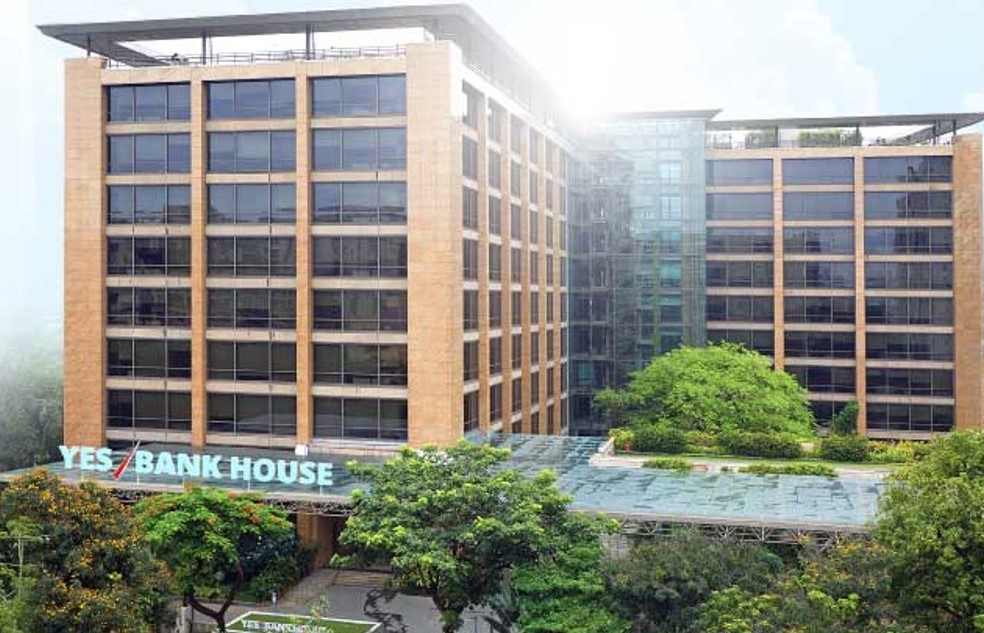
Yes Bank’s buyer, Sumitomo Mitsui Banking Corporation (SMBC), has taken a much narrower 24.2% ownership in Yes Bank for Rs 16,548 crore and has ruled out any further stake upheaval in the near-term. Adopting a more cautious approach, Japan’s second-largest bank has stated that there are many areas which Yes Bank still needs to work on. SMBC has no intent yet to seek fresh approval from the Reserve Bank of India (RBI) to increase its stake beyond the current permissible limit of 24.99%.
SMBC, the largest shareholder in Yes Bank, will have to work along with the State Bank of India (SBI), which still holds a significant 10.8% stake after selling 13.18% to the Japanese lender for Rs 8,888.97 crore. Analysts, however, expect SMBC to eventually buy out the remaining stakes of SBI and Life Insurance Corporation of India (4%), come out with a mandatory public offer and hold a controlling interest in Yes Bank to guide its future destiny.
Emirates NBD will immediately have full authority to shape RBL Bank’s future journey after it obtains the regulatory approvals to complete the largest foreign direct investment ever in India’s financial services sector. RBL will also be India’s first profitable private lender to be majority-owned by a foreign bank.

The RBL-Emirates NBD deal comes at a time when development of the India-Middle East-Europe economic corridor is getting a push amid shifting geopolitics and US President Donald Trump’s tariffs-led global trade uncertainties. Also in mind is to target with more aggression the Indian remittance market, with the UAE being the second-largest source after the US and accounting for $24 billion in 2024.
According to Emirates NBD Group CEO Shayne Nelson, the deal will further complement the Dubai bank’s service to customers operating throughout the Middle East, North Africa, Turkey and South Asia (MENATSA) region. “We envisage to support Indian businesses, trade, projects and other opportunities throughout the region leveraging our network,” he said.
The Yes Bank-SMBC deal is similarly looking to benefit from increased trade and investment flows between Japan and India. Japan has emerged as the fifth largest investor in India and the trade volume has touched $25.15 billion in FY25. New initiatives between the two nations include partnerships in high-speed railway system, clean energy, semiconductors and biopharmaceuticals.
Besides ramping up domestic retail and MSME (micro, small and medium enterprises) loans, the two deals will hope to capitalise on the growing economic relationship between the partner nations, investment flows, trade finance and cross-border payment solutions.
Yes Bank, which is currently the sixth-largest private sector bank in India, wants to claw back to its old status of being the fourth-biggest before it sank under the weight of bad loans and fraudulent divergence of funds. As of 30 September 2025, the new-age lender’s loan book was Rs 2.50 lakh crore while deposits stood at Rs 2.96 lakh crore spread across 1,295 branches.
Getting a partner which has assets of over $2 trillion and operations across 39 countries including 15 in the Asia-Pacific region, Yes Bank can now plan aggressive business growth. The corporate loan book is expected to get a big boost and opportunities will come knocking in wealth management and investment banking businesses. Analysts said the deal will support a credit rating upgrade within two quarters, a lowering of funding costs and profitability.
RBL is much smaller in size compared to Yes Bank but has the aspiration to grow multi-fold after Emirates NBD’s capital infusion. As of 30 September 2025, RBL’s loan book stood at Rs 1 lakh crore on a deposit base of Rs 1.17 lakh crore. The customer base was at 14.98 million and the lender had a network of 564 branches.
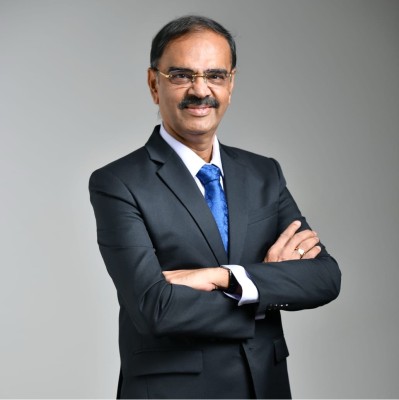
“Our ambition is to move from a mid-sized bank to the league of large banks in the next three to five years,” RBL managing director and CEO CEO R Subramaniakumar told reporters.
Emirates NBD, which has assets worth $296 billion as of end-June, will bring in the financial muscle and provide RBL Bank the capital to grow. The Mumbai-based lender will gain strength from NBD’s presence in the MENAT (Middle East, North Africa and Turkey) region, serving nine million customers across 13 countries. The target will be to grow the corporate loan book, enhance remittances and get into the wealth management business.
RBL Bank will first merge with Emirates NBD's wholly owned subsidiary, which operates just three branches in India offering trade finance, treasury services and bilateral and syndicated loans. This will give it the status of a listed foreign bank subsidiary.
Not long back there were concerns about the health of RBL Bank when in December 2021 the RBI appointed its chief general manager Yogesh Dayal as additional director on the board of RBL Bank. This followed the abrupt resignation and exit on medical leave of RBL Bank’s longstanding CEO Vishwavir Ahuja. The lender got veteran banker Subramaniakumar as its new MD and CEO in June 2022, taking over from Rajeev Ahuja who served in the interim as the CEO. The bank has stabilised since then.
Starting in 1943 as Ratnakar Bank with a strong rural focus, the private lender got a push when Vishwavir Ahuja joined in 2010 as the chief executive. The former CEO of Bank of America, India, renamed Ratnakar Bank as RBL Bank in 2014 and positioned it as a future-ready bank. He also aggressively grew the bank’s credit card business.
Growth accelerated but the first indication of asset quality deterioration came when RBL revealed in its October 2019 investor presentation for Q2 FY20 that exposure to corporate groups were at Rs 1,800 crore, of which Rs 800 crore was recognised as non-performing asset (NPA) in that quarter. In Q3, gross NPA ratio rose to 3.3% from 2.60% in the preceding quarter and net NPA to 2.07% in the September quarter from 1.56% a quarter ago.
“Challenges in a few corporate accounts and related provisioning requirements have impacted the bottom line for the quarter. We are digesting this short-term pain and are looking to put this behind us over the next few months,” Ahuja then said, while commenting on the third-quarter results of FY20.
The pain lasted longer for the bank, despite tightening the risk filters. The outbreak of Covid-19 pandemic in early 2020 hit the bank in a severe way and it couldn’t recover fully from then on as gross NPA widened to 4.34% by FY21-end and 4.40% by FY22-end. But the situation has improved gradually since then and there is new hope for scale up after the stake acquisition of NBD Emirates.
Rebuilding RBL and Yes Bank will now be left for the new masters at a time when India is further freeing the financial sector. The RBI has introduced liberal reforms to allow banks to fund corporate takeovers and increase the Rs 10,000 crore cap on individual corporate loan exposure. The government is also considering lifting the foreign direct investment (FDI) cap in state-owned banks to 49% from the current limit of 20%.
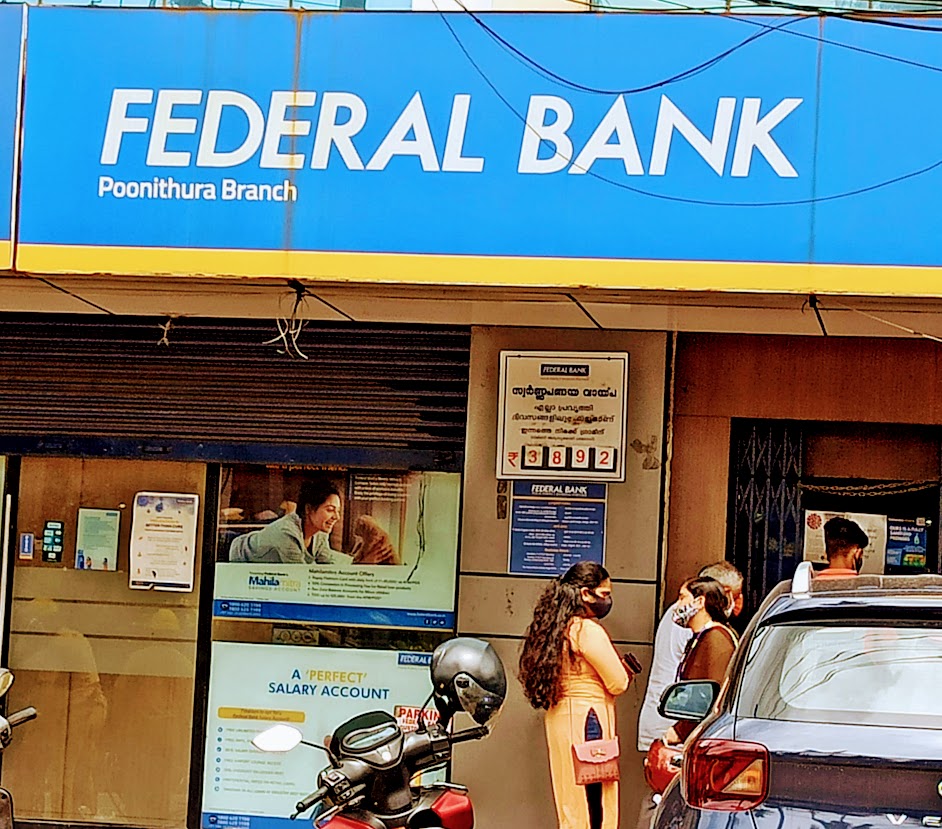
Besides the Yes Bank-SMBC and RBL-NBD deals, Federal Bank has got a proposal from US-based private equity firm Blackstone to acquire 9.9% stake for Rs 6,196.5 crore ($705 million). A few months back, Warburg Pincus and Abu Dhabi Investment Authority (ADIA) agreed to invest Rs 7,500 crore in IDFC First Bank to fuel the private lender’s next phase of growth.
The inflow of foreign capital into Indian banks will make the sector healthier as it readies for a new round of consolidation.